Sourcing
Secondhand-first, by default.
By Couri · May 7, 2026
Most shopping tools have a quiet bias: they send you to buy something new, full-price, today. It's the path with the cleanest affiliate links and the fewest surprises. It's also, very often, the worst version of the piece you actually wanted.
We build Couri to check secondhand, local, and resale first (before full-price new) and to be honest about why. This isn't a sustainability badge bolted onto a shopping app. It's a belief about where the better piece usually lives.
The better piece is often the older one
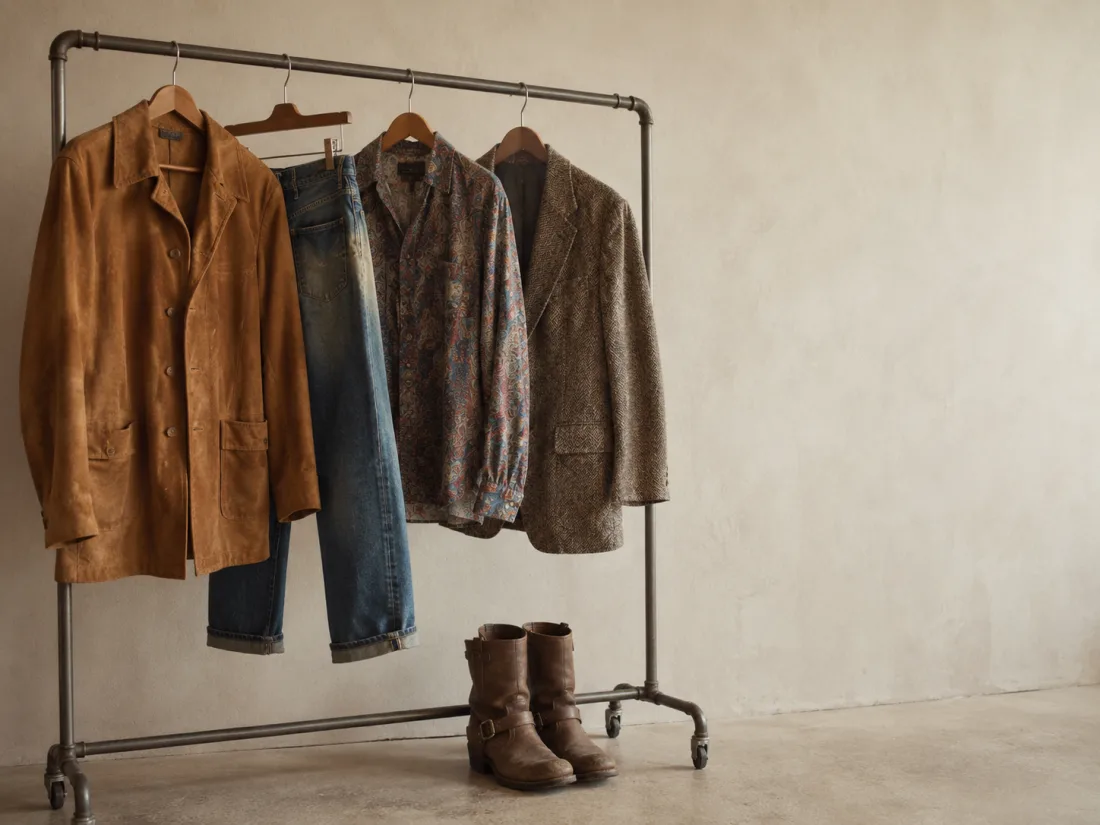
Go looking for a heavy wool overcoat, a real leather jacket, a properly made pair of trousers, and you'll keep running into the same thing: the version from ten years ago is built better than the version on the shelf now. Denser fabric, real hardware, seams that were sewn to last. Resale is where those pieces went, and they're frequently cheaper than the thinner thing being sold as new.
Secondhand also has range that retail can't touch. A current season is a few hundred options; the last thirty years is millions. If you want something specific (a particular cut, a discontinued color, a brand that stopped making the good version) the only place it exists is on someone else's rail.
New isn't better. It's just newer.
Character, impact, and your wallet
There's a character argument too. A piece with a little history reads differently than something straight off a mannequin. It looks like a choice, not a checkout. That's most of what people mean when they call a wardrobe interesting.
The impact argument is real and we'd rather understate it than inflate it. Keeping a garment in circulation instead of producing a new one avoids the water, energy, and waste of making it twice, about 25% less carbon than buying new, by ThredUp's lifecycle figures. We won't put a number on screen we can't point to, and we won't inflate one to sound greener.
And the local boutique two blocks away is its own kind of source: sometimes the only one carrying a smaller label, often the one where trying it on is easiest. "In your city" is a real filter, not a slogan.
How Couri ranks across four sources
When you ask for something, Couri searches four places at once: new, secondhand, local, and online. Every candidate is scored on the same axes (fit, taste, budget, and locality) and ranked into one list, with a plain-English reason attached to each result. A pristine resale find that nails your brief will outrank a full-price new piece that only half does. That's the point.
We don't hide the new option when it's genuinely the right call: if the thing you want only exists new, that's what you'll see, and Couri will say so. "Secondhand-first" means it's the default lens, not a rule we force on you. The new-only path is always there. It just stops being the only path you're shown.
Cheaper, often better made, lower impact, more yours. When all four point the same way, defaulting to new is just a habit worth dropping. Your call, every time. We'll only make the better one easier to find.
Find it everywhere you shop.
Early access opens soon. One note when your invite is ready. Nothing else.
Join the waitlist →